Home
| Rebecca Fry | ||||
![]() | Assistant Professor Environmental Sciences & Engineering Curriculum Vitae |
|
||
| Education | ||
| 2000 | Tulane University | PhD, Biology |
| 1997 | Tulane University | MS, Biology |
| 1995 | William Smith College | BS, Biology |
| Research interests |
| Cancer Child development Environment (water) Global health |
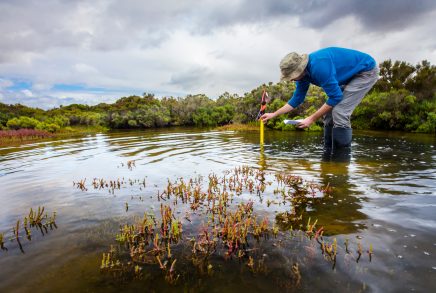
| Research activities Our lab uses environmental toxicogenomics and systems biology to understand heavy metal-induced carcinogenesis. In addition to the study of exposed human populations, the lab uses numerous model systems (yeast, worms, cell culture) to understand the biological effects of heavy metal exposure and to identify arsenic-toxicity protective proteins. Our research will enable the identification of genetic and epigenetic biomarkers of metal exposure and metal-induced disease. Ultimately, we aim to identify mechanisms of metal -induced disease and the basis for inter-individual disease susceptibility. |
| Key publications |
| Rebecca C. Fry, Peter Svensson, Chandni Valiathan, Emma Wang, Brad J. Hogan, Sanchita Bhattacharya, James M. Bugni, Charles A. Whittaker and Leona D. Samson (2008) Genomic predictors of interindividual differences in response to DNA damaging agents.. Genes and Development, p.2621. |
| Fry RC, Navasumrit P, Valiathan C, Svensson JP, Hogan BJ, Luo M, Bhattacharya S, Kandjanapa K, Soontararuks S, Nookabkaew S, Mahidol C, Ruchirawat M, Samson LD (2007) Activation of inflammation/NF-kappaB signaling in infants born to arsenic-exposed mothers.. PLoS Genet.: vol.11, p.e207.. |
| Rusyn I, Fry RC, Begley TJ, Klapacz J, Svensson JP, Ambrose M, Samson LD. (2007) Transcriptional networks in S. cerevisiae linked to an accumulation of base excision repair intermediates.. PLoS ONE.: vol.11 |
| García A, Ihrig MM, Fry RC, Feng Y, Xu S, Boutin SR, Rogers AB, Muthupalani S, Samson LD, Fox JG (2008) Genetic susceptibility to chronic hepatitis is inherited codominantly in Helicobacter hepaticus-infected AB6F1 and B6AF1 hybrid male mice, and progression to hepatocellular carcinoma is linked to hepatic expression of lipogenic genes and immune function-associated networks.. Infect Immun.: vol.76(5), p.1866-76. |
| Fry RC, DeMott MS, Cosgrove JP, Begley TJ, Samson LD, Dedon PC. (2006) The DNA-damage signature in Saccharomyces cerevisiae is associated with single-strand breaks in DNA.. BMC Genomics: vol.7, p.313. |